


Assignment Description:
This critical and creative assignment asks you to explore how sound reveals the often-overlooked connections between environmental injustice and lived experience. You will begin by listening deeply to a space impacted by environmental harm or inequality—this could be due to noise pollution, industrialization, gentrification, racialized neglect, or lack of green space. Through this process, you will reflect on how sound and listening practices can expose, resist, or even help transform environmental injustice.

This culminating assignment invites students to synthesize theoretical, practical, and experiential learning into an original digital project. Drawing from the course themes—borders, identity, migration, power, and sound—students will conceptualize, design, and produce a Sonic Borderlands digital project that explores the intersections between sound and border discourses.

While traditional maps offer visual representations of location data, Mapping Sound provides alternative insights by engaging multiple senses. These maps assign sounds to specific data points, aiding information delivery and unveiling nuanced community details. Rodaway’s (1994) concept of sonic geography describes how sound delineates physical landscapes and encapsulates socio-economic exchanges, offering a theoretical foundation for this sensory-based mapping approach. In this practice, you will explore the Mapping Sound method as part of Sonic Rhetorics. This tool aims to cultivate a culture of listening within community research projects, particularly focusing on integrating sound dimensions into research essays addressing community-based issues. Through this assignment, you will deepen your understanding of sound’s impact on communities and develop a greater sensitivity to listening in the research process.
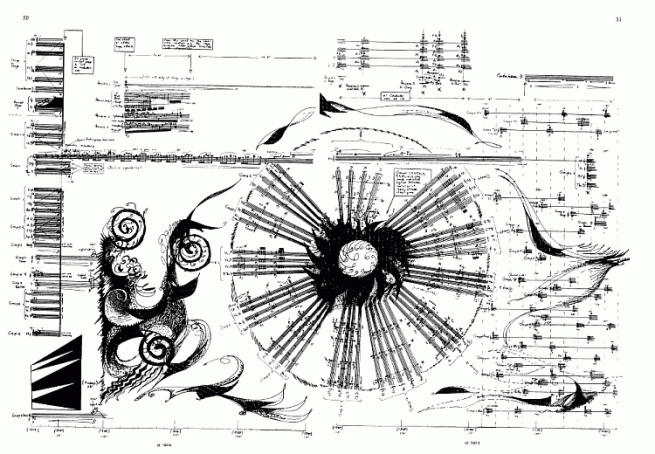
“Music is a sound, a sound that surrounds us, whether we are inside or outside the concert halls” —John Cage
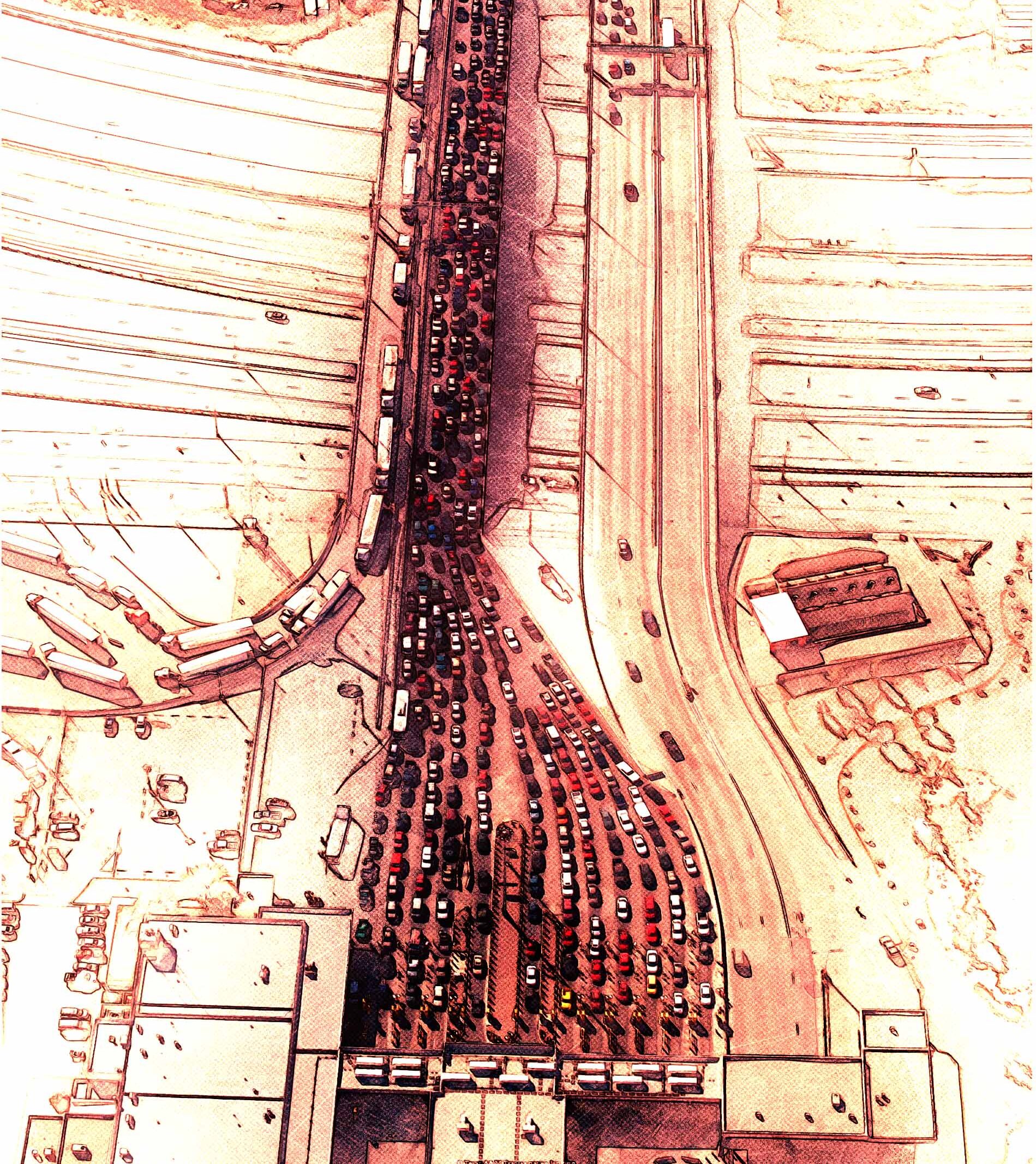
The interest of this web text is delimited in the Soundscapes of the border bridges that connect Ciudad Juárez and El Paso. As a product of engineering and technology, bridges can be considered as inexhaustible sources of sound production. The daily dynamic remains active 24 hours a day, seven days a week. Every single day, people cross borders to carry out their daily activities, such as work, study, shopping, negotiate, visit, or just for a hobby, both on one side and the other.
Jose Manuel Flores
Sounds originate from diverse sources—music, noise, and language. In speech, accent quality integrates intensity and tonal quantity. Sound morphology encompasses the structural and organizational facets of sound, involving its configuration, development, and attributes within temporal or spatial contexts.
Inherent to sound, the syllable serves as a foundational unit composed of phonemes, engaging two consecutive sound perceptions and muscular actions. Additionally, phonic groups are situated amid pauses, segregating sounds within intervals of silence. Applied within the domain of sound studies, soundscape morphology focuses on modifications within sound groups, arranged similarly in time or space. Despite sound’s invisibility, its essence can be captured using technology. Spectrograms or waveforms translate sound into visual depictions, facilitating a detailed examination of its morphology. This analysis unveils essential physical attributes like pitch, duration, intensity, and timbre.
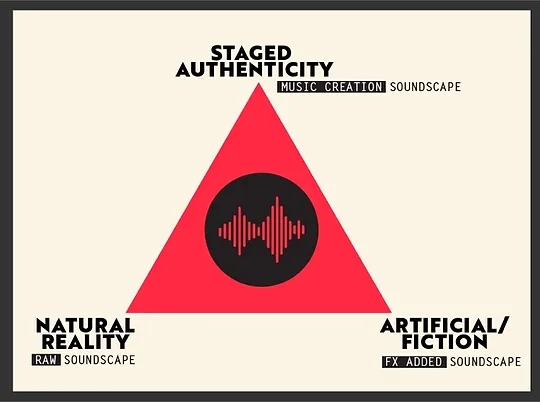
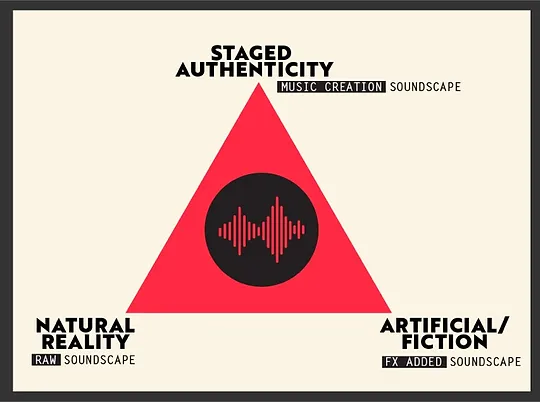
Figure. Dimensions of sound. Source: Flores (2019